Canvas by Thesys
The agentic-workflow design tool where generative UI was born.
Ask about this project — or anything Rahul's built.
Canvas was the first product at Thesys: design and prototype agentic workflows.
Imagine an agent, auto-generate its conversation flows, take the front-end code home.
It built interfaces at design time. The agent couldn't generate them live.
Chasing that gap became OpenUI. Canvas was the stepping stone.
It didn't stay a prototyping tool. Building it is what surfaced the real idea: interfaces that get generated from intent, not hand-built screen by screen. That insight became generative UI, and the reason the company pivoted to OpenUI, the engine. Canvas was sunset in 2025, having done the one thing that mattered: it found the product.
At a glance
Designing with pieces
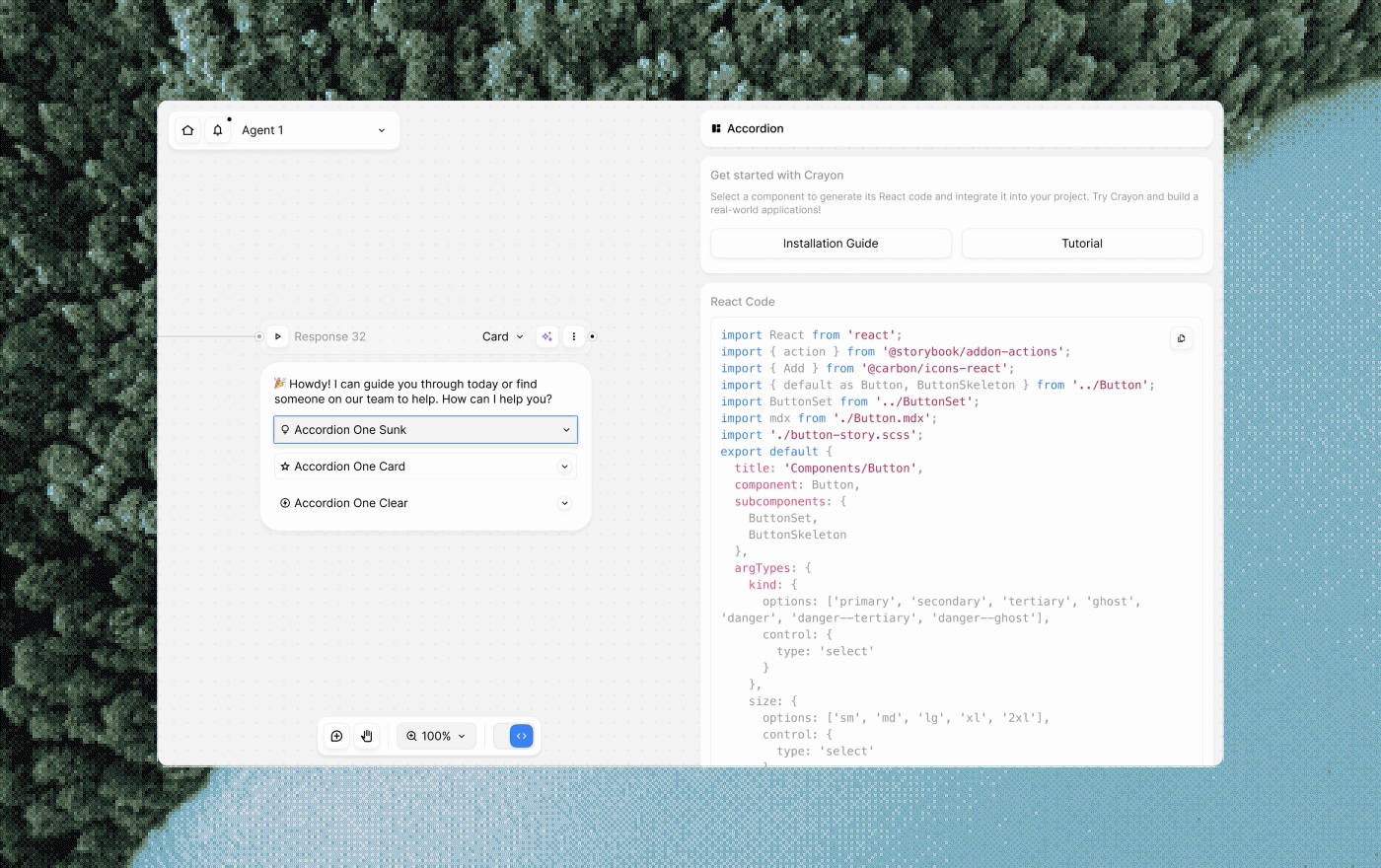
Instead of speccing an agent screen by screen, you built it on a canvas from modular pieces, composing the workflow and the interface together. The unit of design was the piece, not the page.
From canvas to code
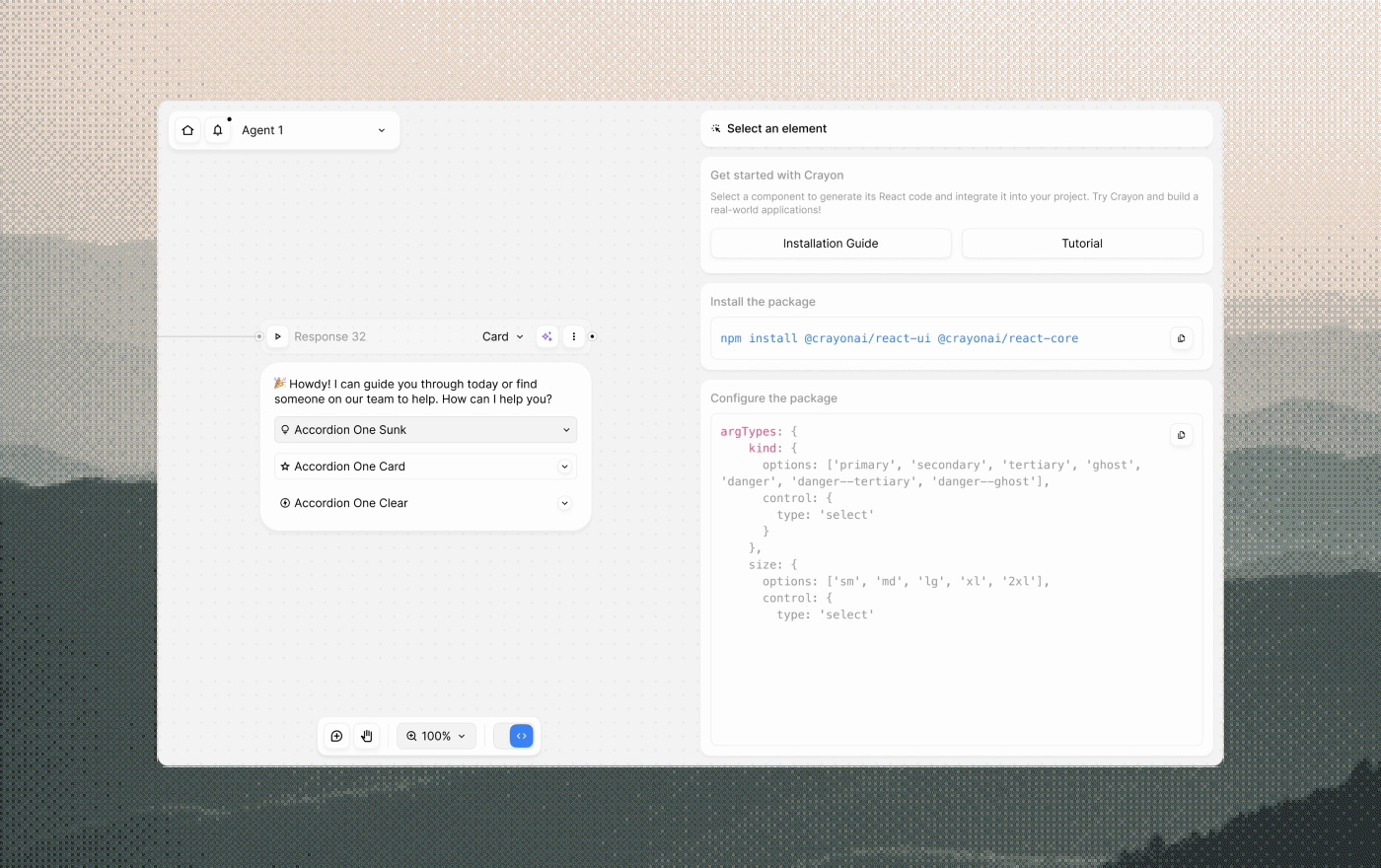
The prototype wasn't throwaway. You could take what you designed on the canvas and get code for it, so the thing you imagined was also the thing you could ship from. The design was the spec; no redraw step between idea and build.
The discovery that became OpenUI
The spark was a feature inside Canvas: conversational flows the AI could generate on its own. Seeing that work led to the bigger idea: these UI conversations didn't need to be composed by hand at all. They could be built in real time.
That was generative UI, and it was bigger than the tool we set out to build. The value wasn't the prototyper. It was what it revealed. Canvas started it, OpenUI became the product. That was a good decision.