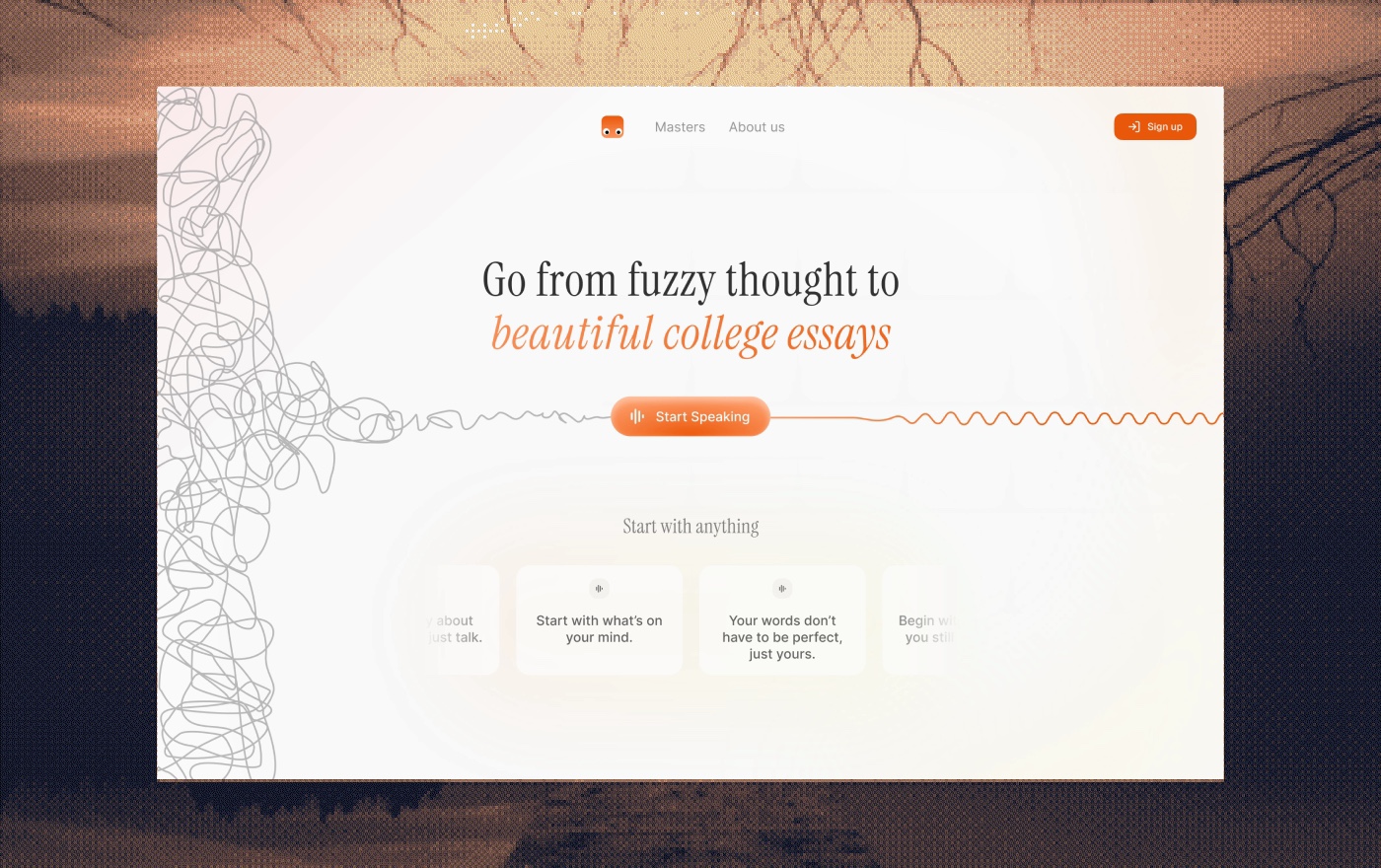
GradBro
A thinking partner that helps students find the story already in their life — and write it in their own voice.
Ask about this project — or anything Rahul's built.
The best college essays aren't great writing.
They're your own story, told well. Everyone has one. Almost no one can dig it out alone.
GradBro helps you mine your life and shape what's there into an essay, in your voice.
Not an essay generator. A thinking partner.
GradBro started with my cousin. He was already building in this space, and brought me a bet: a US version for college-bound students, where the essay has to show who you are. What it became, I designed end to end.
Here's the belief the whole product runs on: a strong essay isn't a feat of writing. It's an ordinary moment (an argument, a small failure, a thing you noticed) told with honesty and reflection. The hard part was never the writing. It's that students can't see which of their own stories matters.
So GradBro works less like an editor and more like a good interviewer. It asks about your life, listens, and reflects a shape back: this. This is the story. Then it helps you write it and pressure-tests it the way an admissions reader would. The essay stays yours the whole way.
I did the product thinking, the UX, the interaction design, the voice and branding, the website, and a short explainer video. One person, the full surface.
The opinions that shaped it
A few calls I made early that everything else hangs off of:
- Students don't need help writing. They need help knowing what to write about. Most essay tools start at the blank page. GradBro starts a step earlier: at the memory.
- The AI should never be the author. It questions, reflects, and nudges. It doesn't ghost-write. The moment it writes your essay for you, the essay stops being worth reading.
- Reflection beats vocabulary. Feedback should tell you why something's weak (a missing beat, a dodged emotion), not swap in a fancier word.
- Talking beats typing. People remember more out loud, and spoken stories carry the emotion that typed ones flatten.
Onboarding: find the story
You don't start by writing. You start by talking.
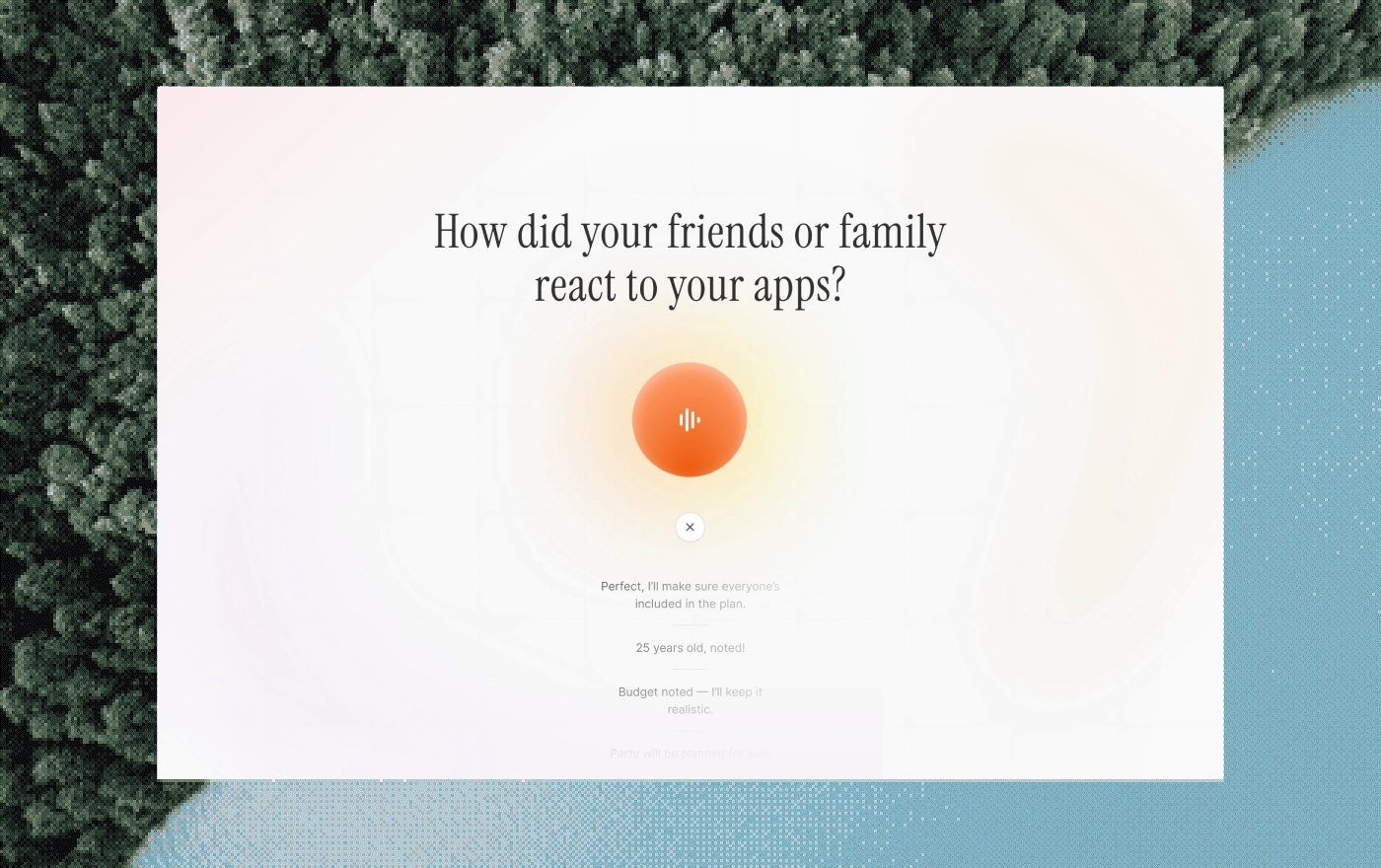
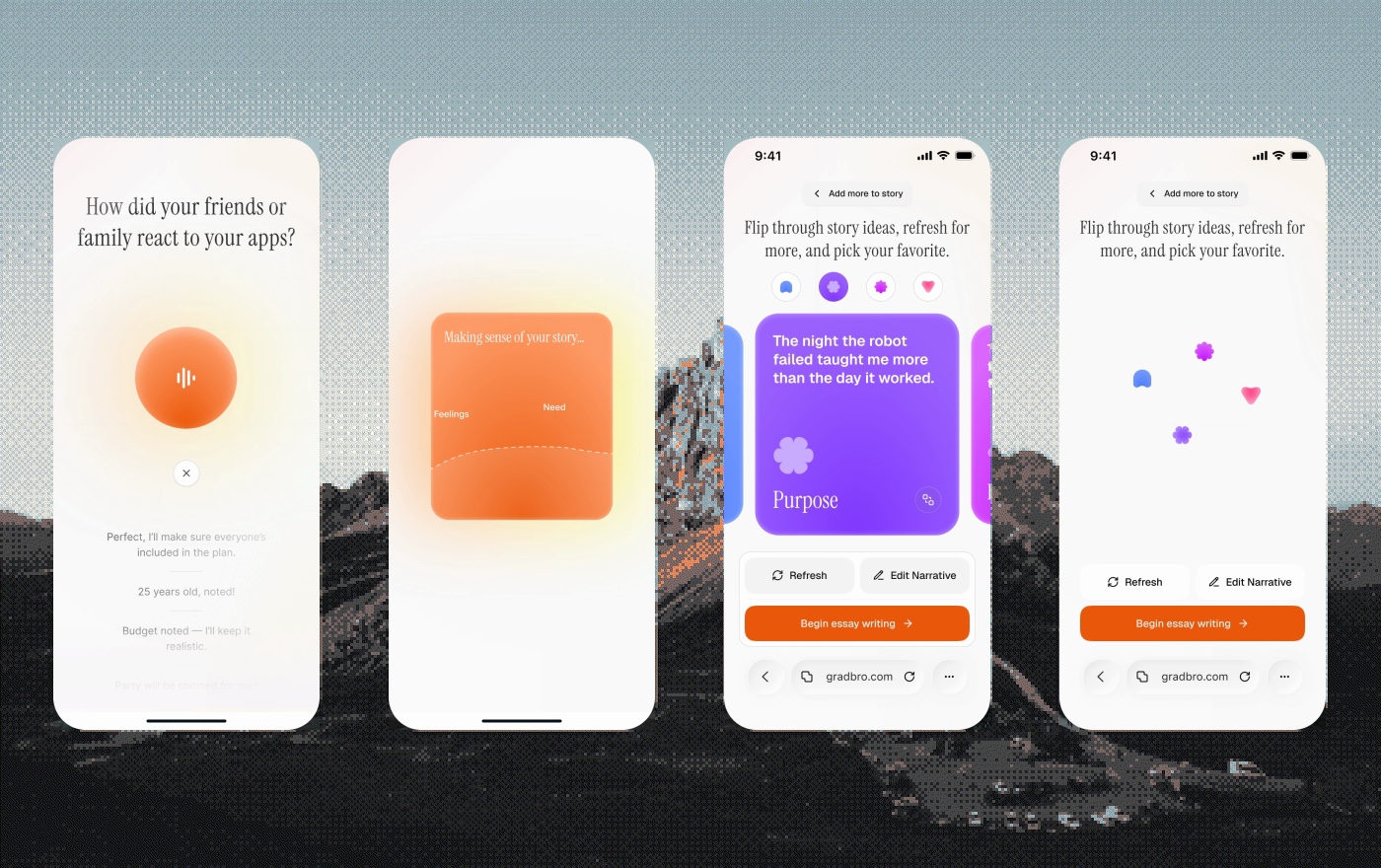
You hit a button and just talk. The AI asks a question, you answer, and it asks the next one based on what you said, following the thread the way a good listener does. No form, no prompt-craft. Just a conversation about your life.
The real work was behind that conversation: what makes a good question. Questions whose answers tend to hide a real essay in them, and the logic that decides what to ask next based on what you just said. That's the hard part of this step: getting the AI to dig in the right places instead of making small talk.
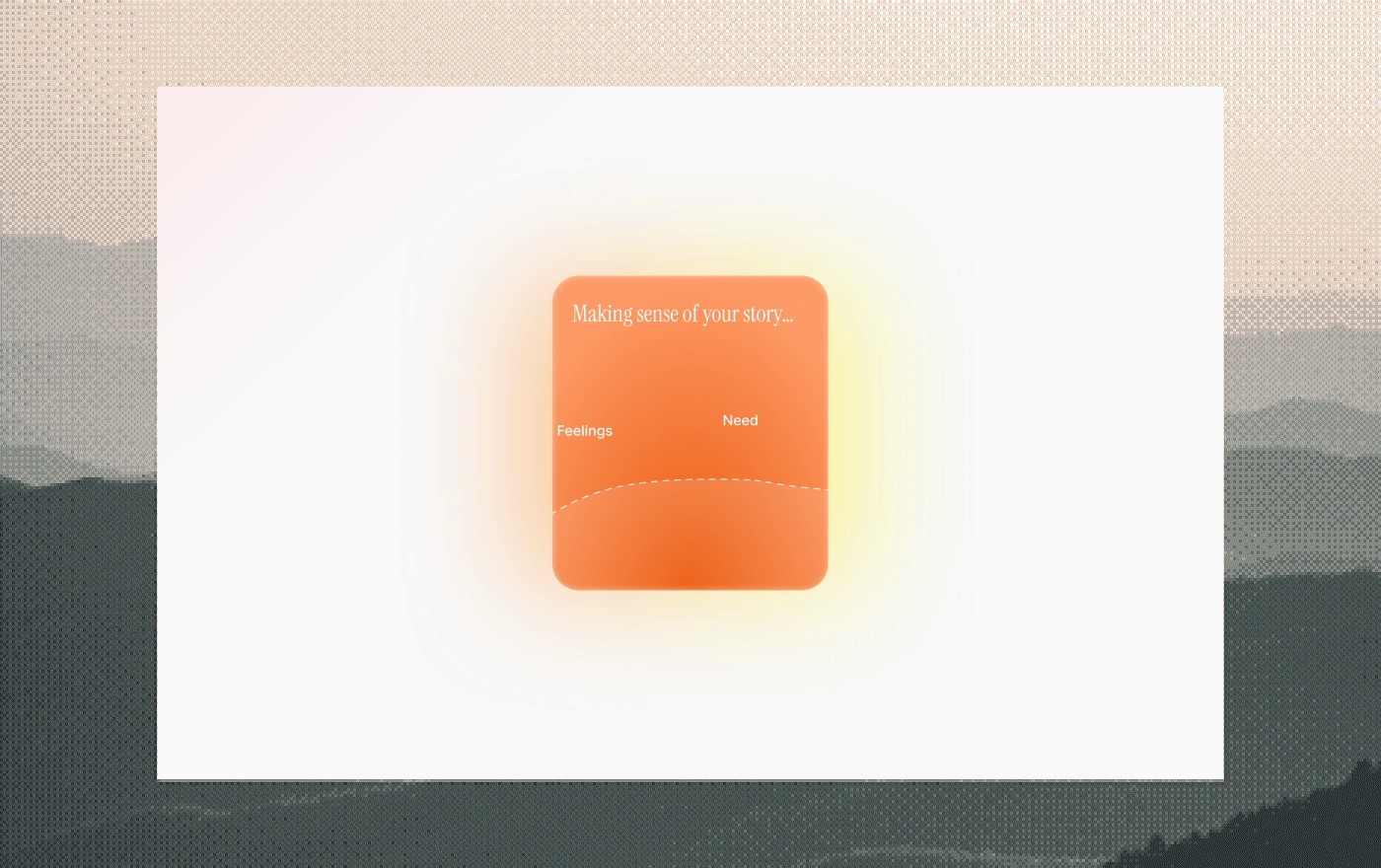
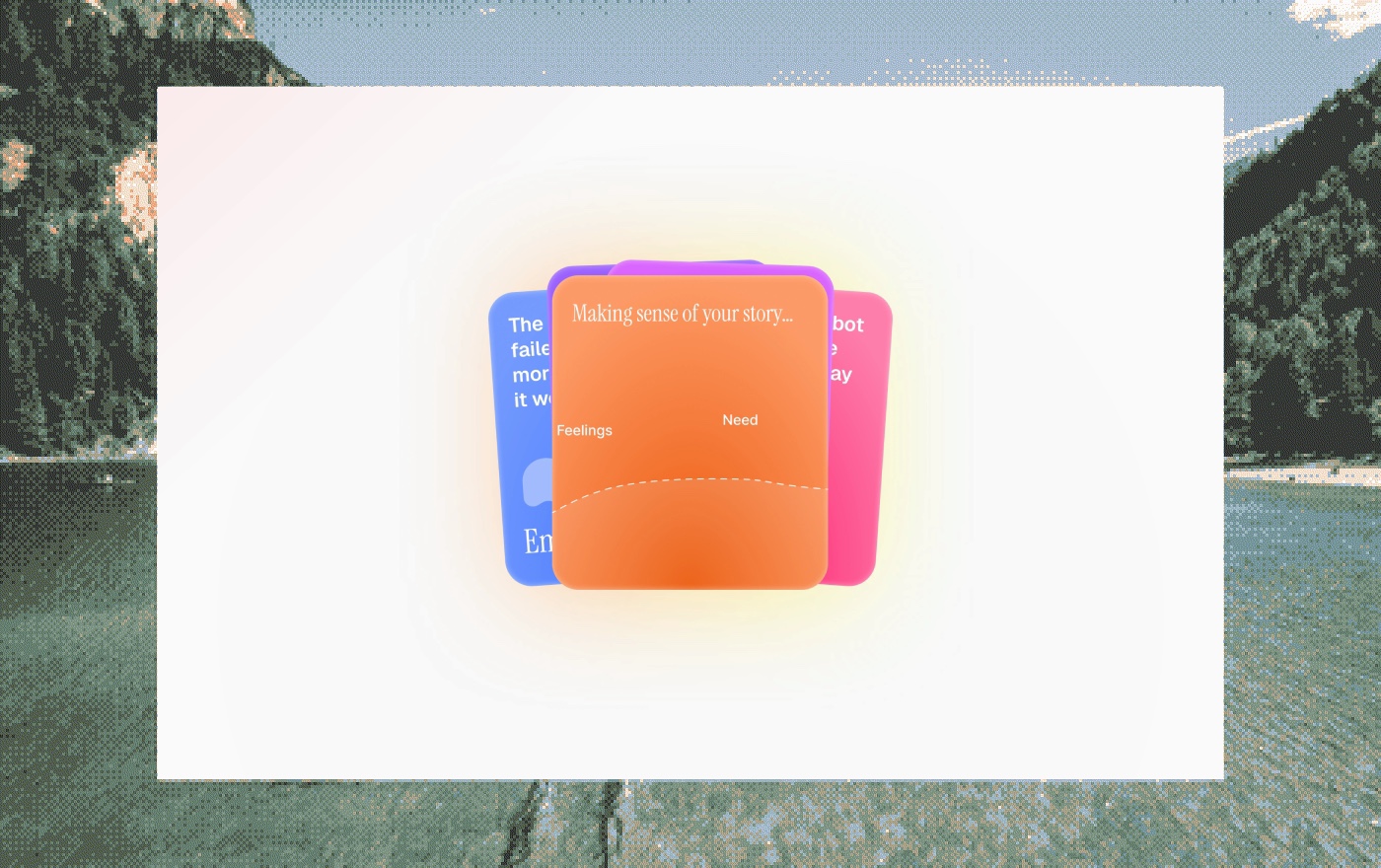
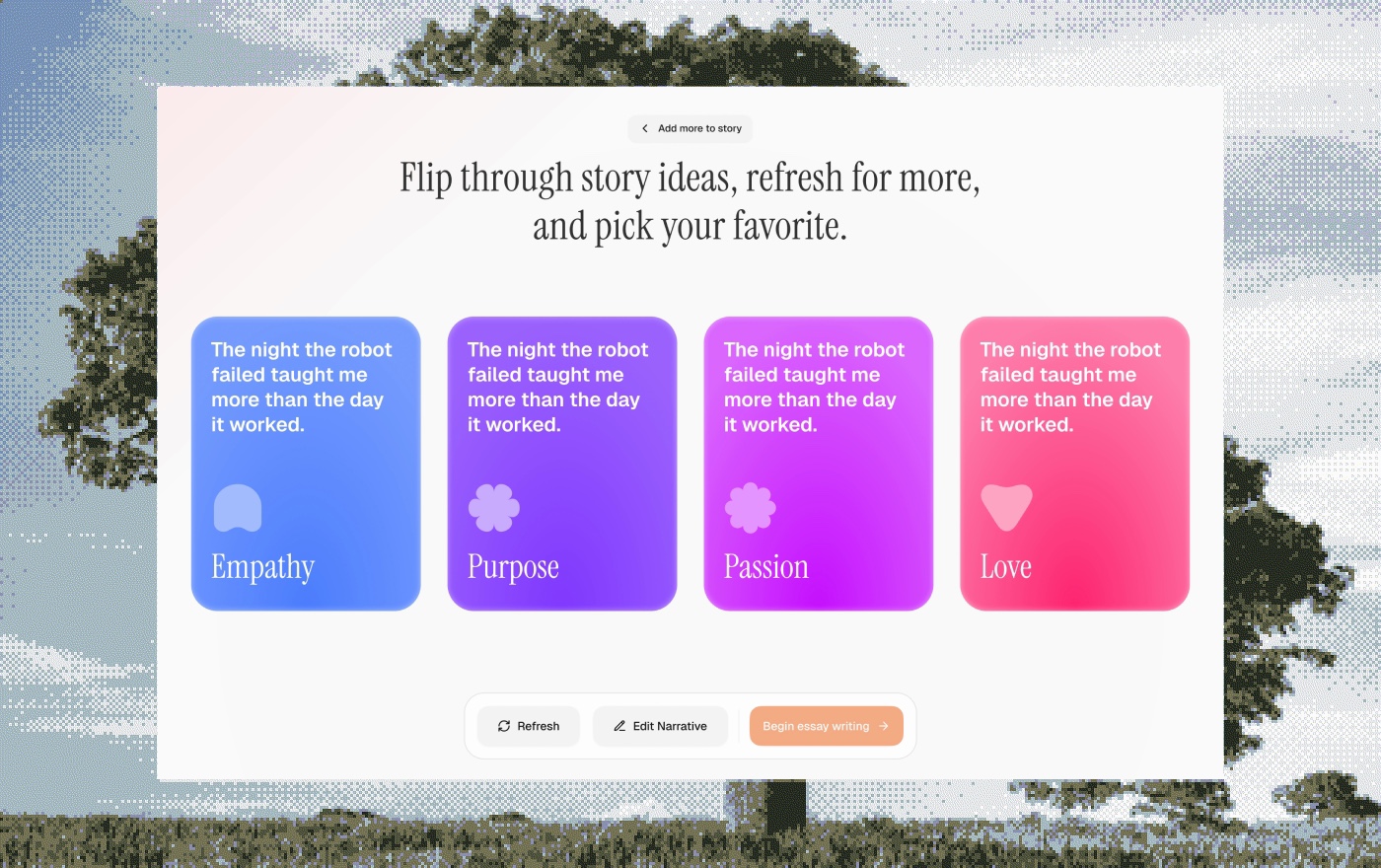
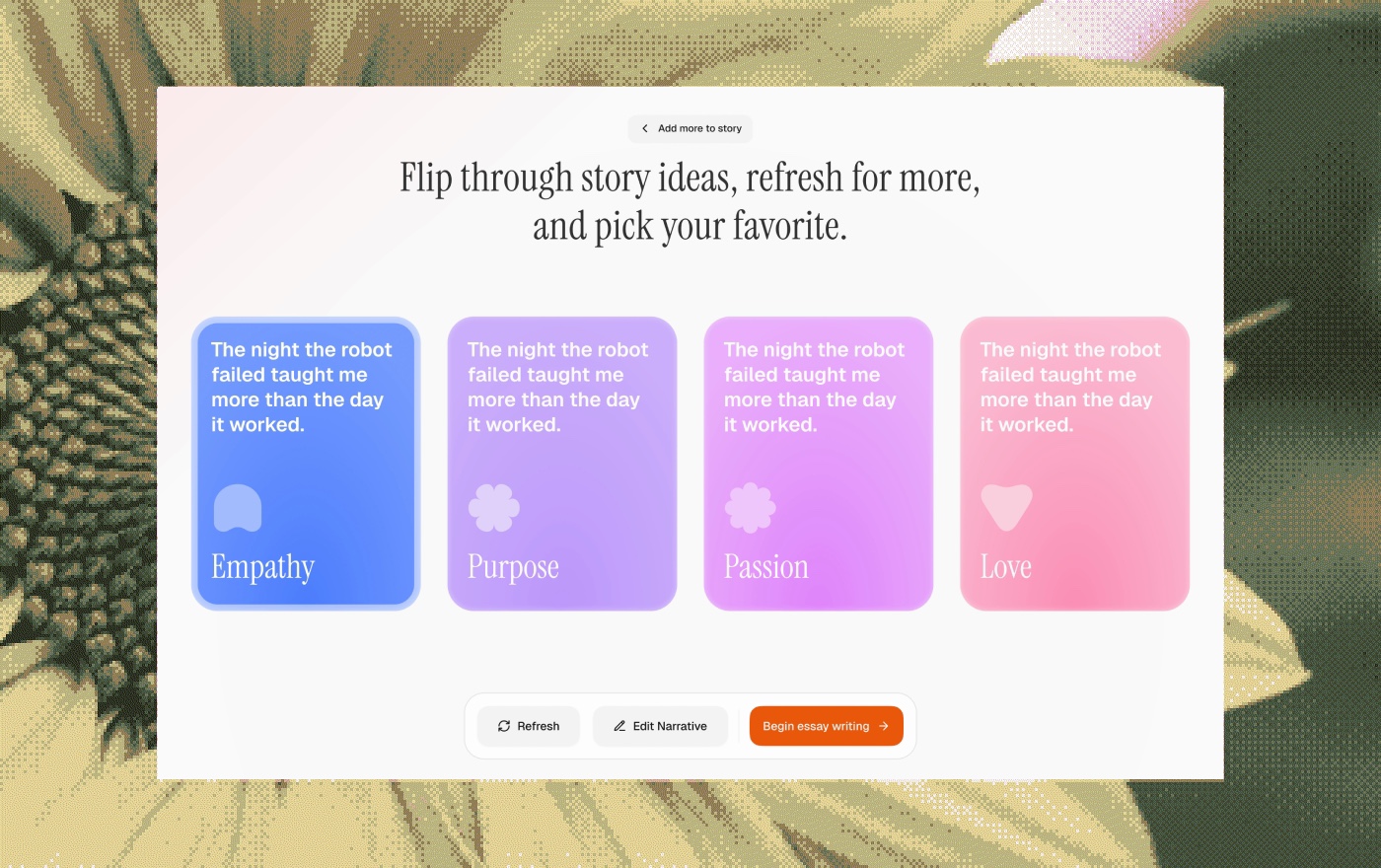
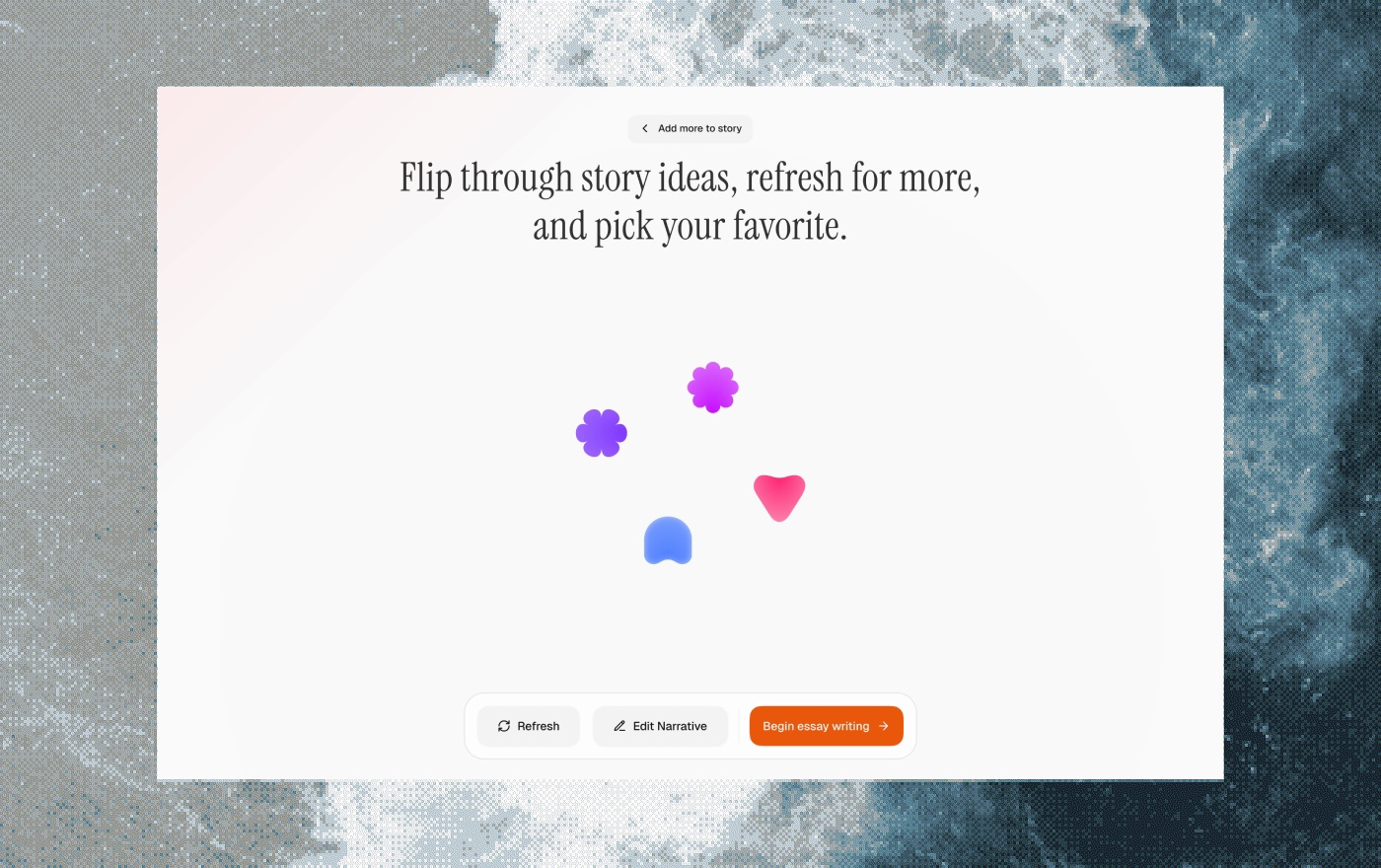
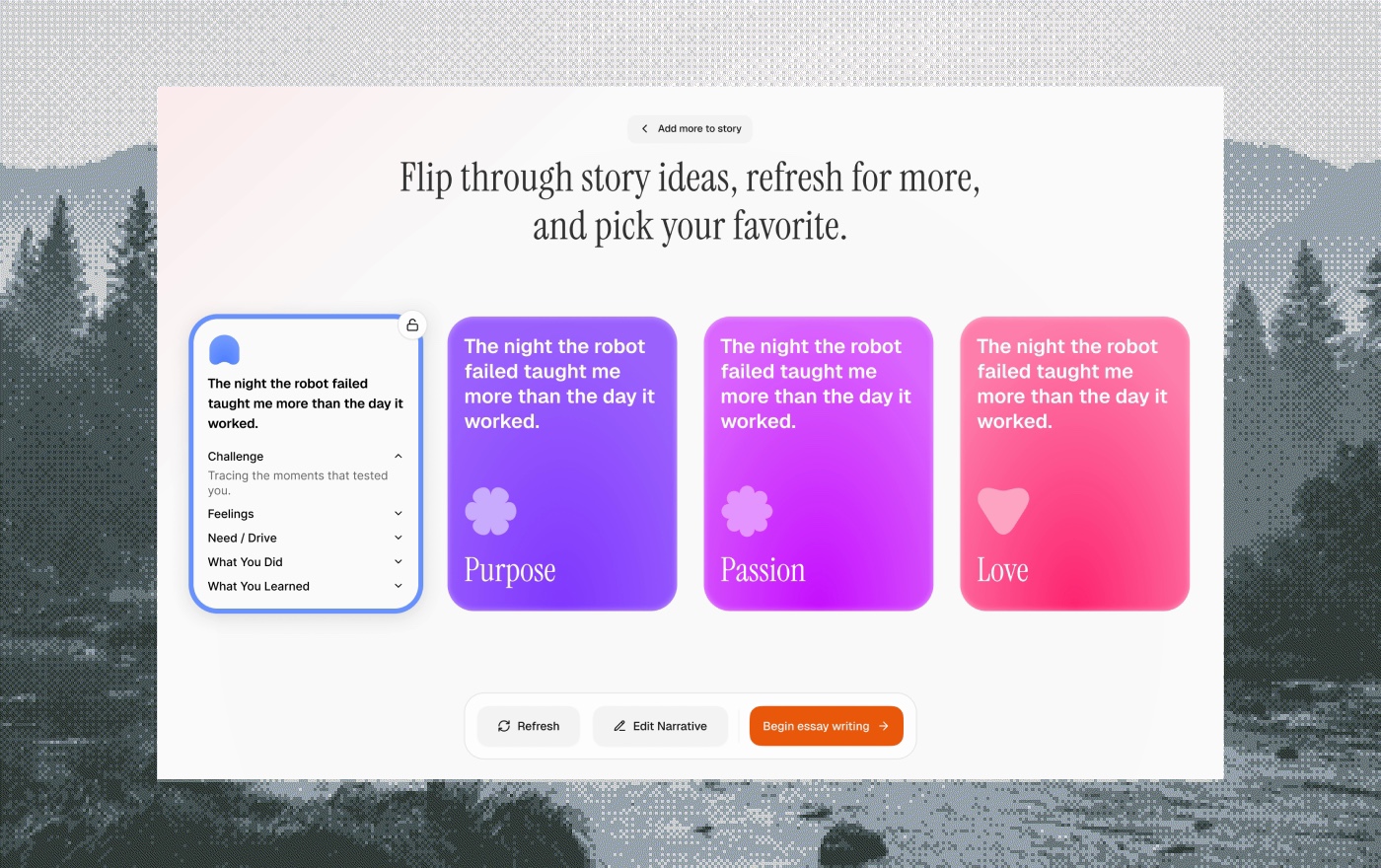
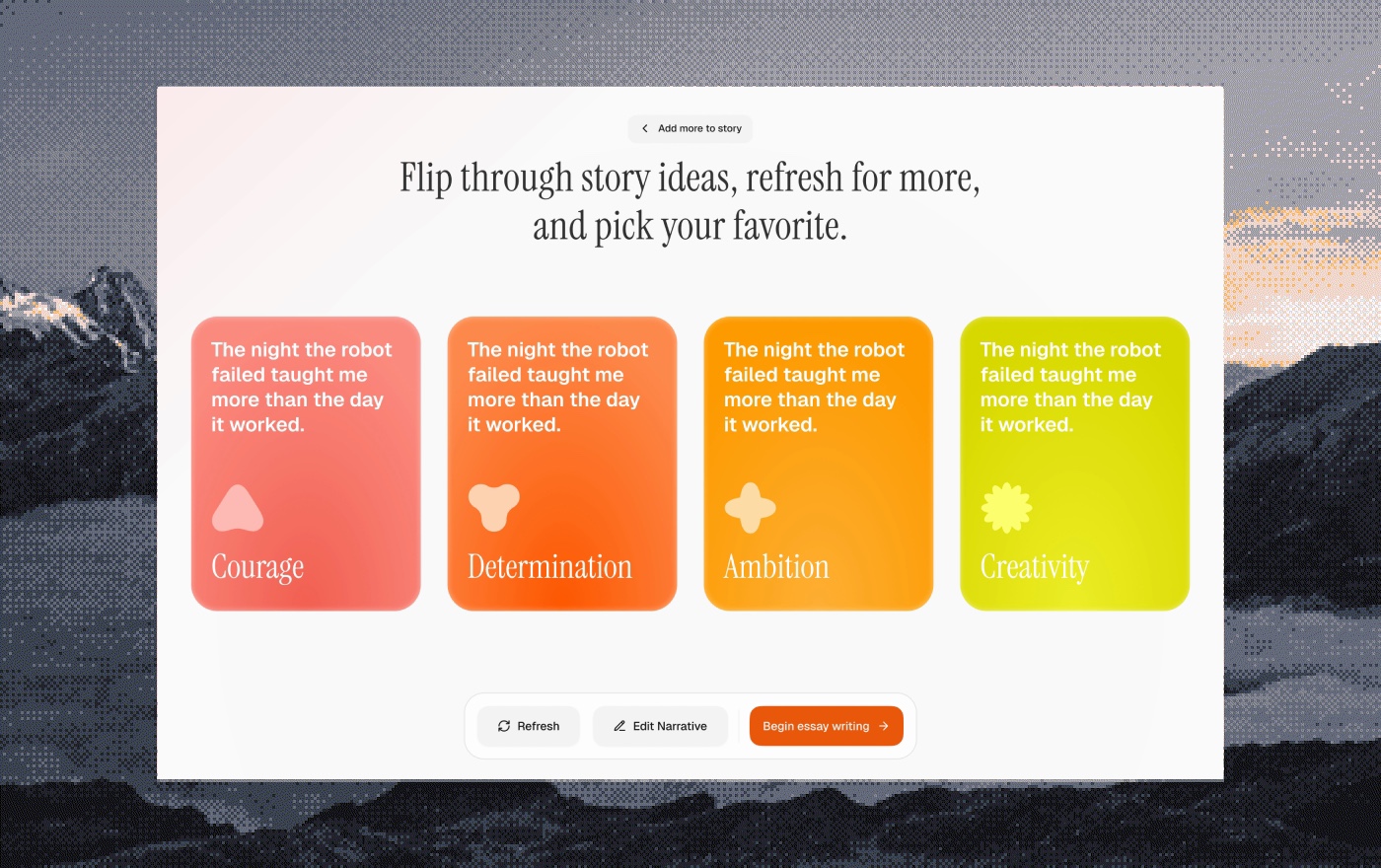
When it has enough, it hands you four narrative directions: four stories it heard in what you said. Pick the one that feels true, switch, or run it again. Then you write with a direction you actually believe in.
That's the whole bet: most students fail the essay before they write a word, because they pick the wrong story. This fixes that first.
Editor & review: write it, then sharpen it
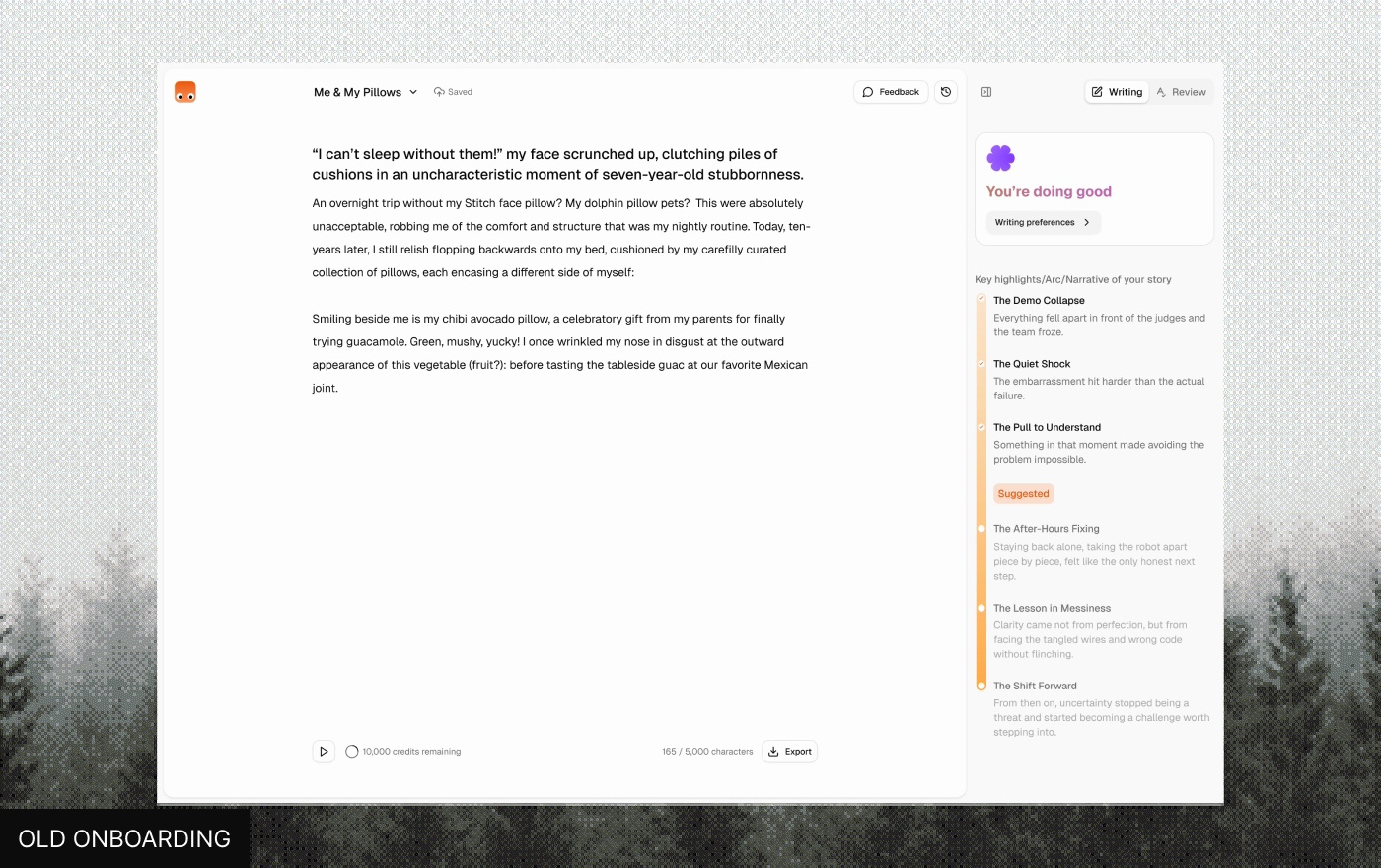
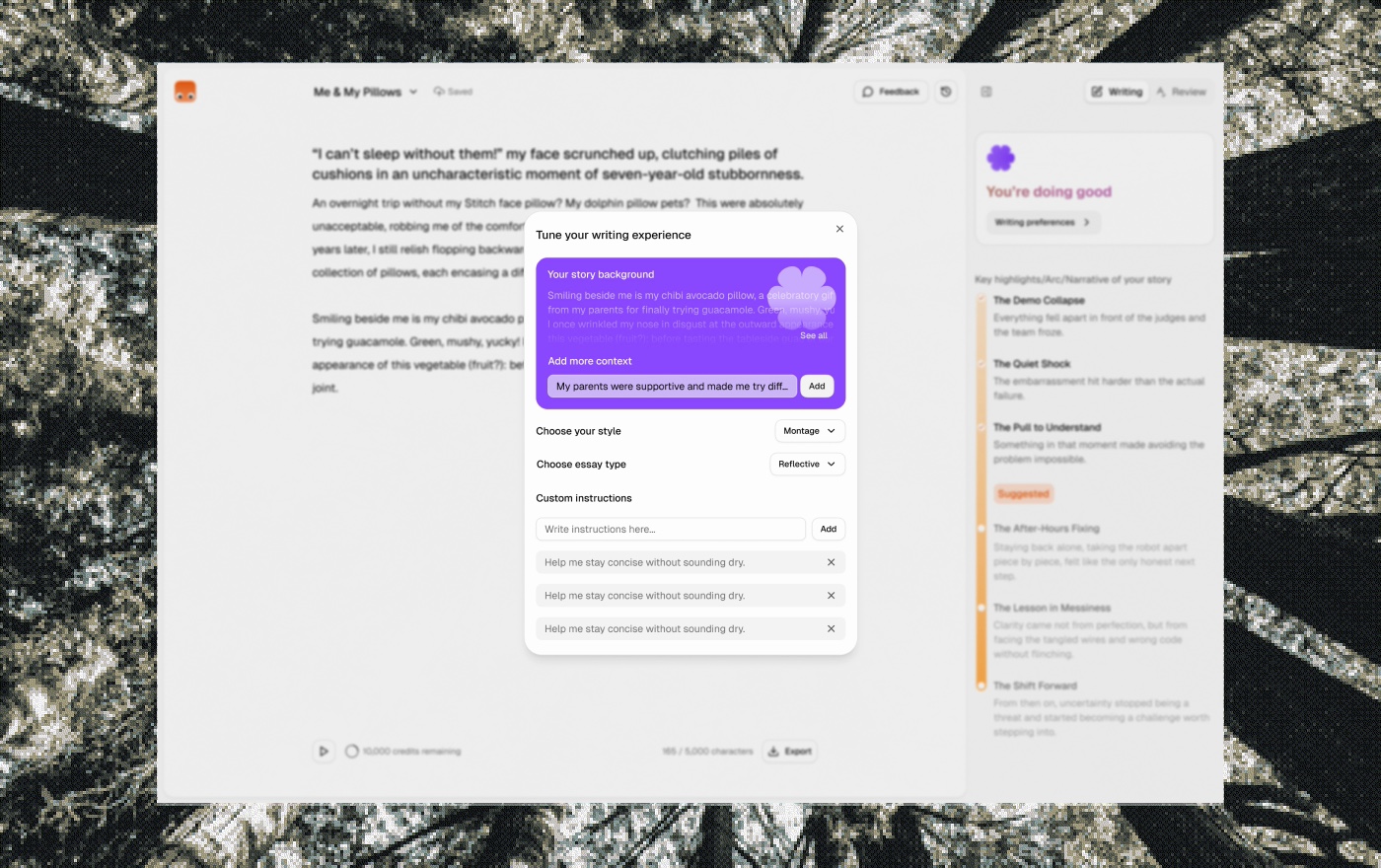
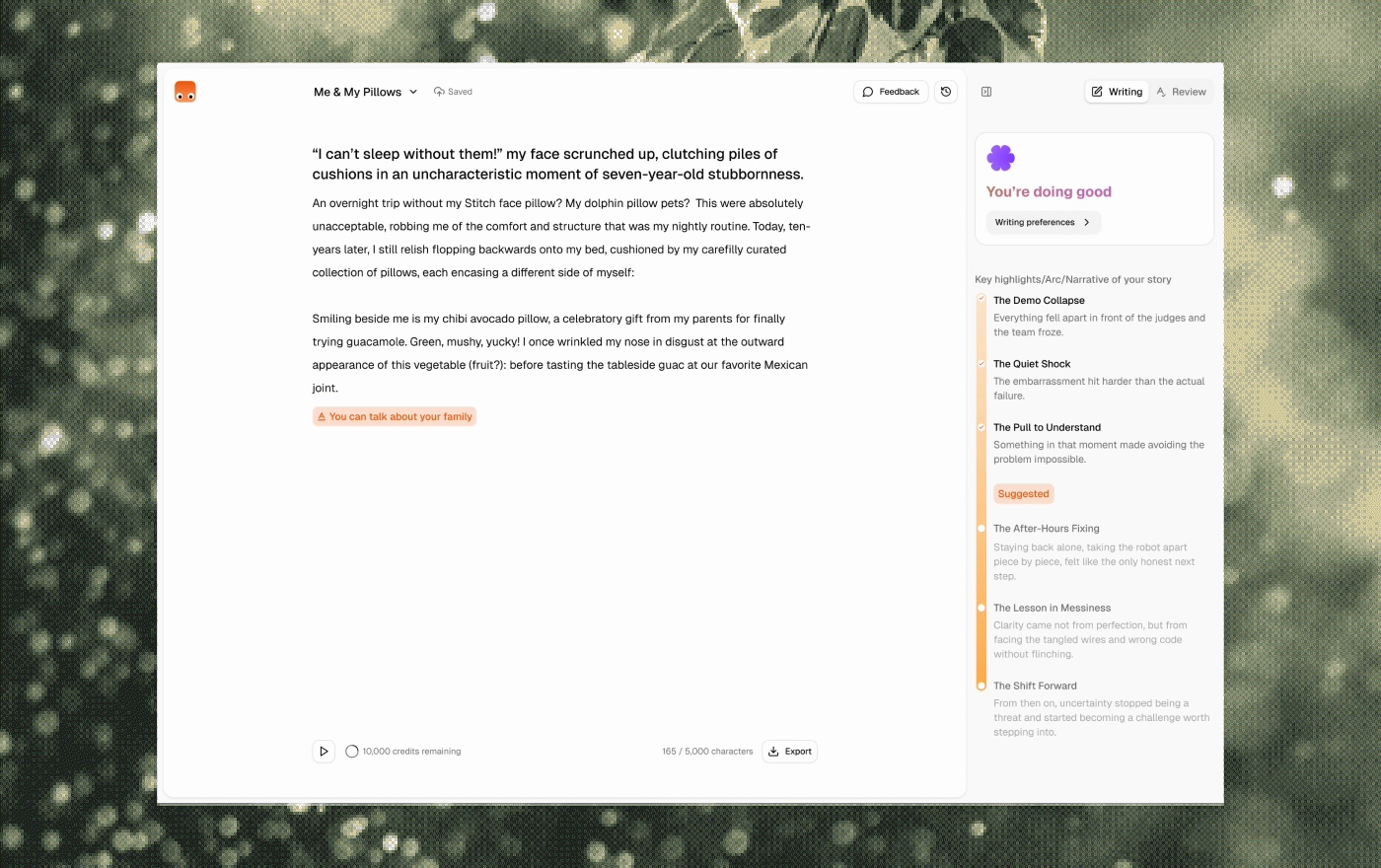
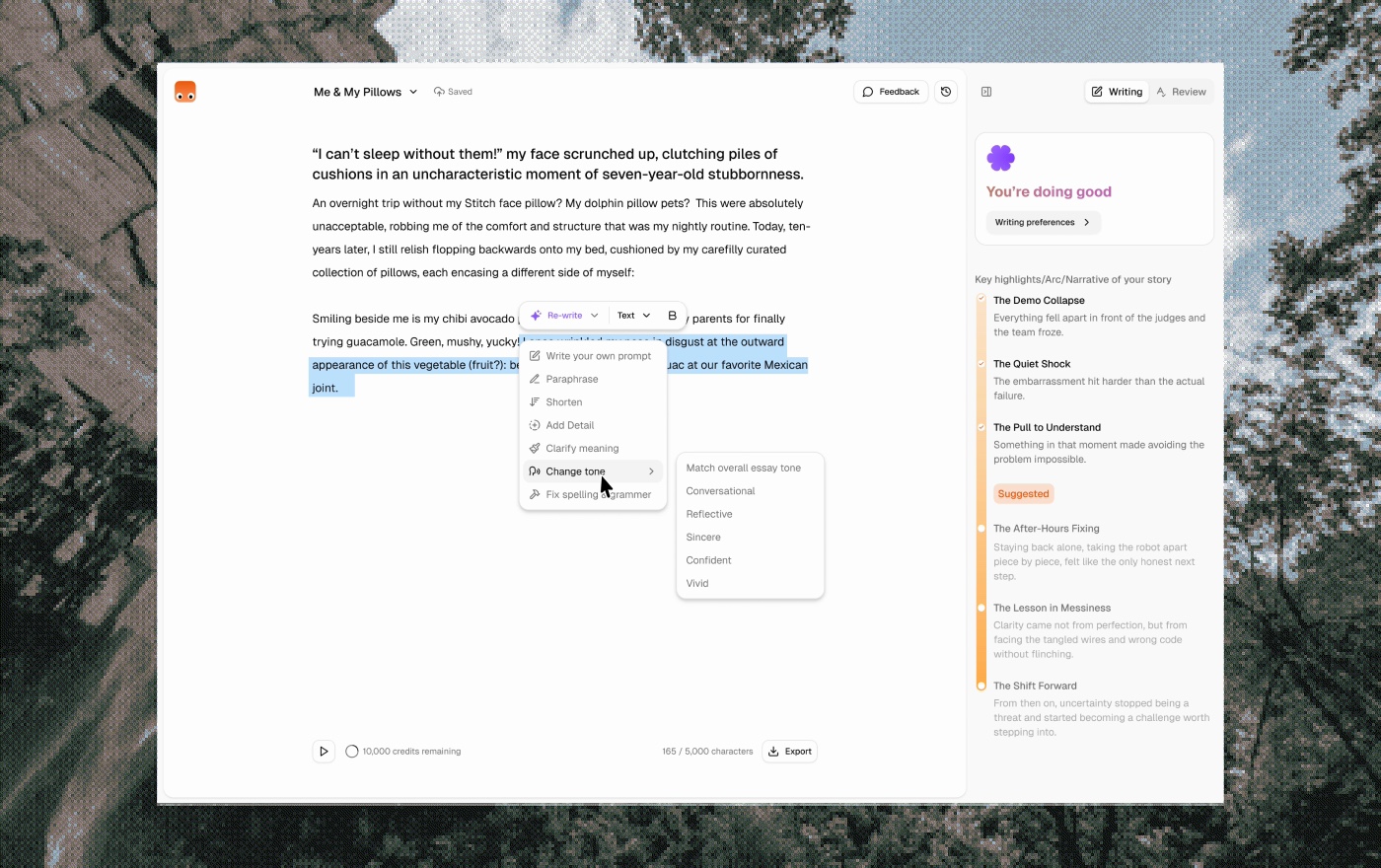
In the editor, you see the arc of the story you chose (the shape a strong essay of this kind tends to follow) and you write to fill it. The structure guides without boxing you in.
The writing experience is built to keep you moving, not to nitpick:
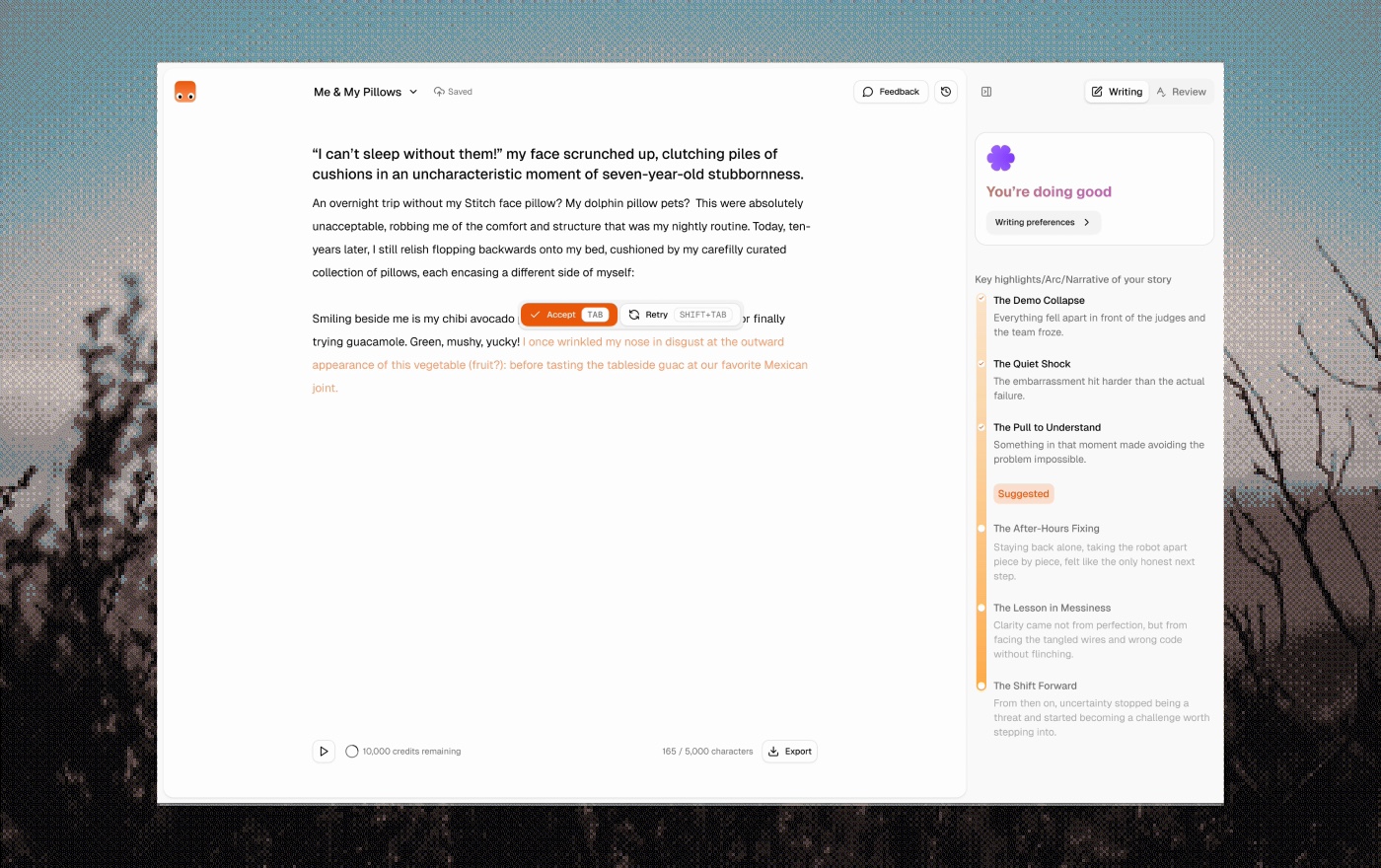
- Inline AI actions: add a grounding detail, deepen the emotion, tighten, simplify, or fix the flow. Targeted help, never a full rewrite.
- Listen to your essay. Writing hides bad rhythm; hearing it read aloud exposes what your eye skips. You catch the clunky line the moment you hear it.
- Auto-complete: write faster with nudges. Beat writer's block.
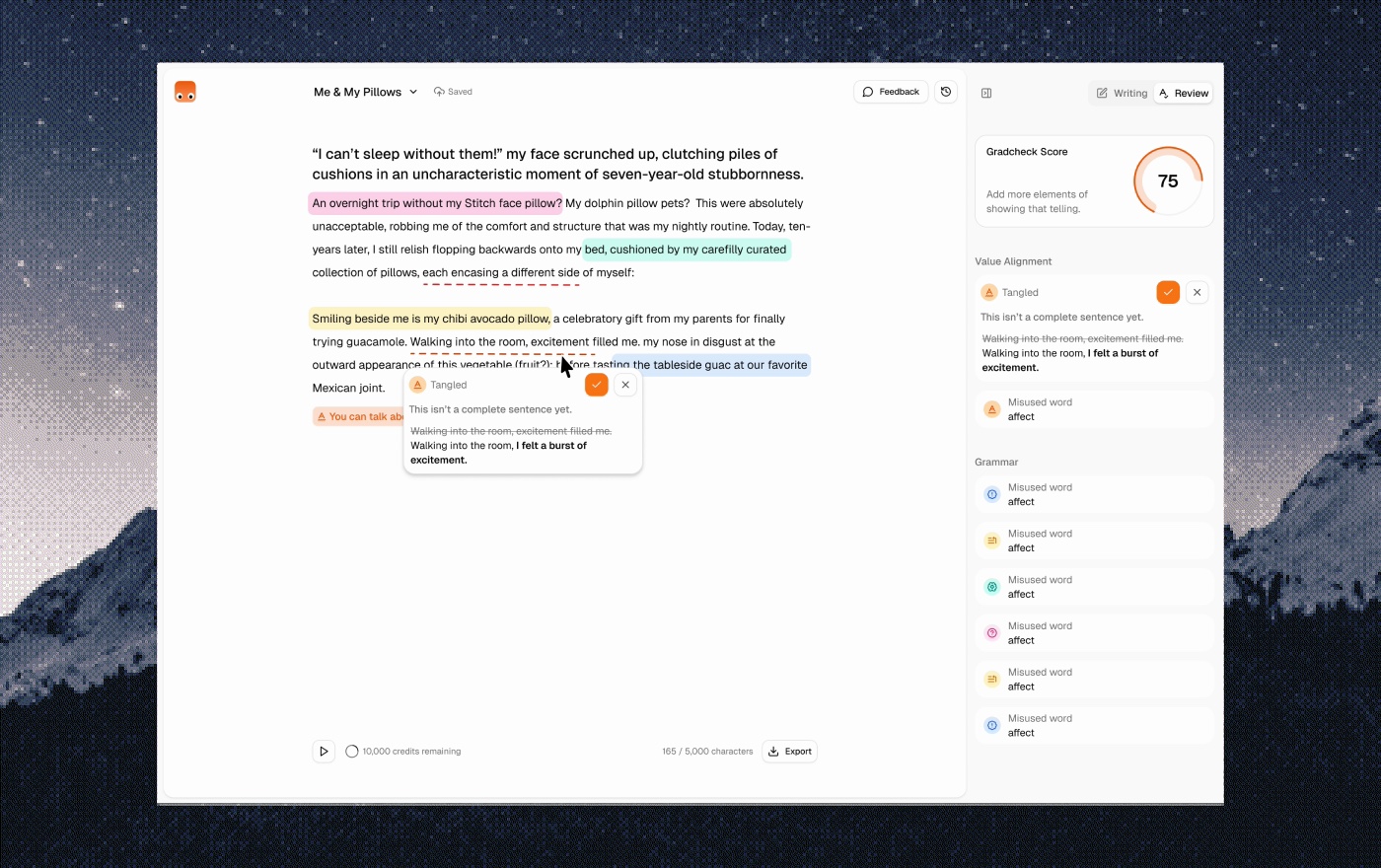
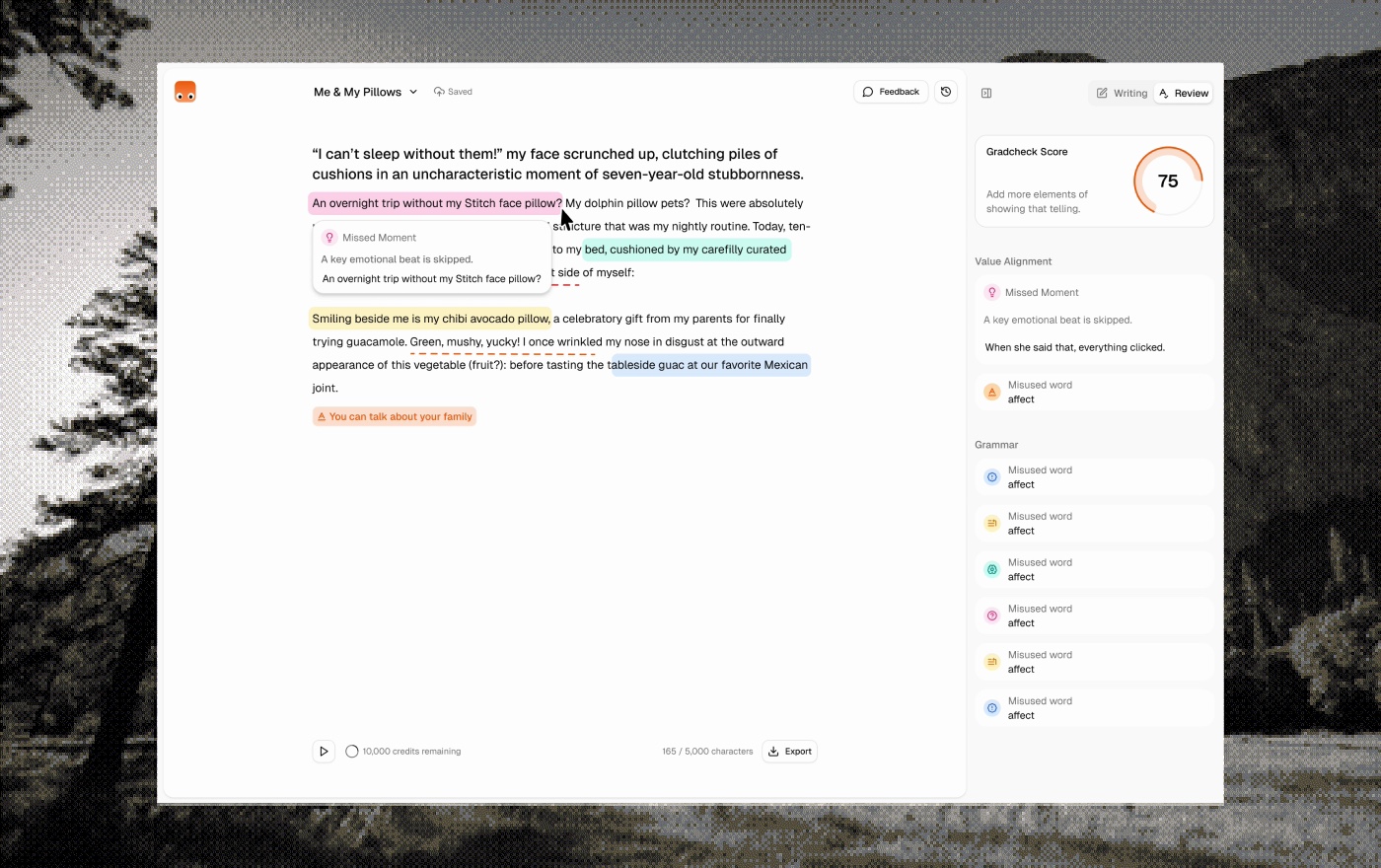
Then there's review, and this is where it stops being a grammar checker. I defined what GradBro looks for, the things an admissions reader actually reacts to:
- This isn't your voice: it's drifting into someone else's register.
- Thin reflection: you mention something big but never ground it. Where's the detail? The emotion?
- Weak hook / weak ending / abrupt transition: the structural beats that make or break a read.
- Relevance drift: this paragraph is wandering from your point.
- A missing turning point: there's a pivot here you haven't claimed; the why isn't on the page yet.
- The generic stuff too: grammar, run-ons, agreement. That's the floor, not the point.
Sessions: talk once, write many
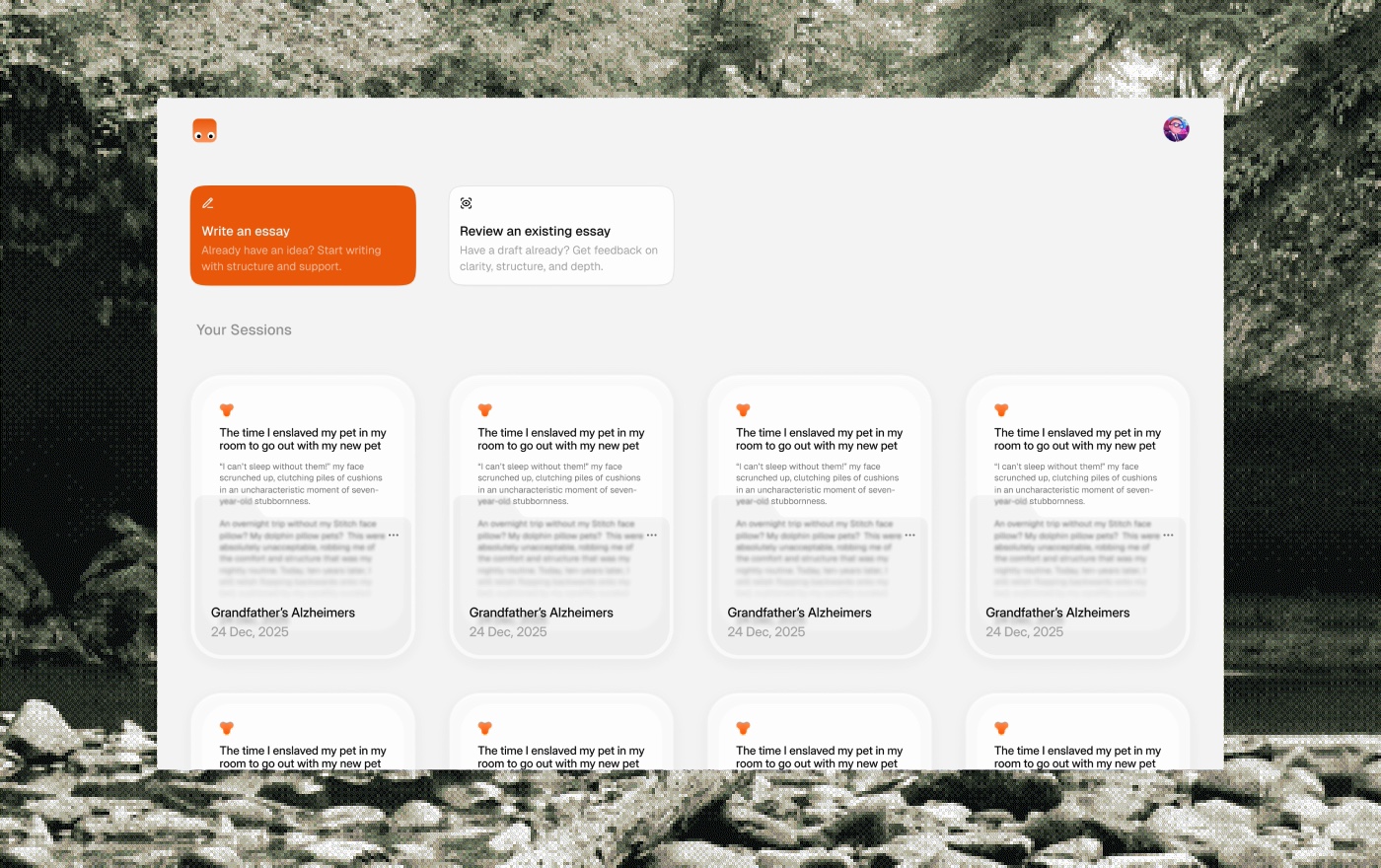
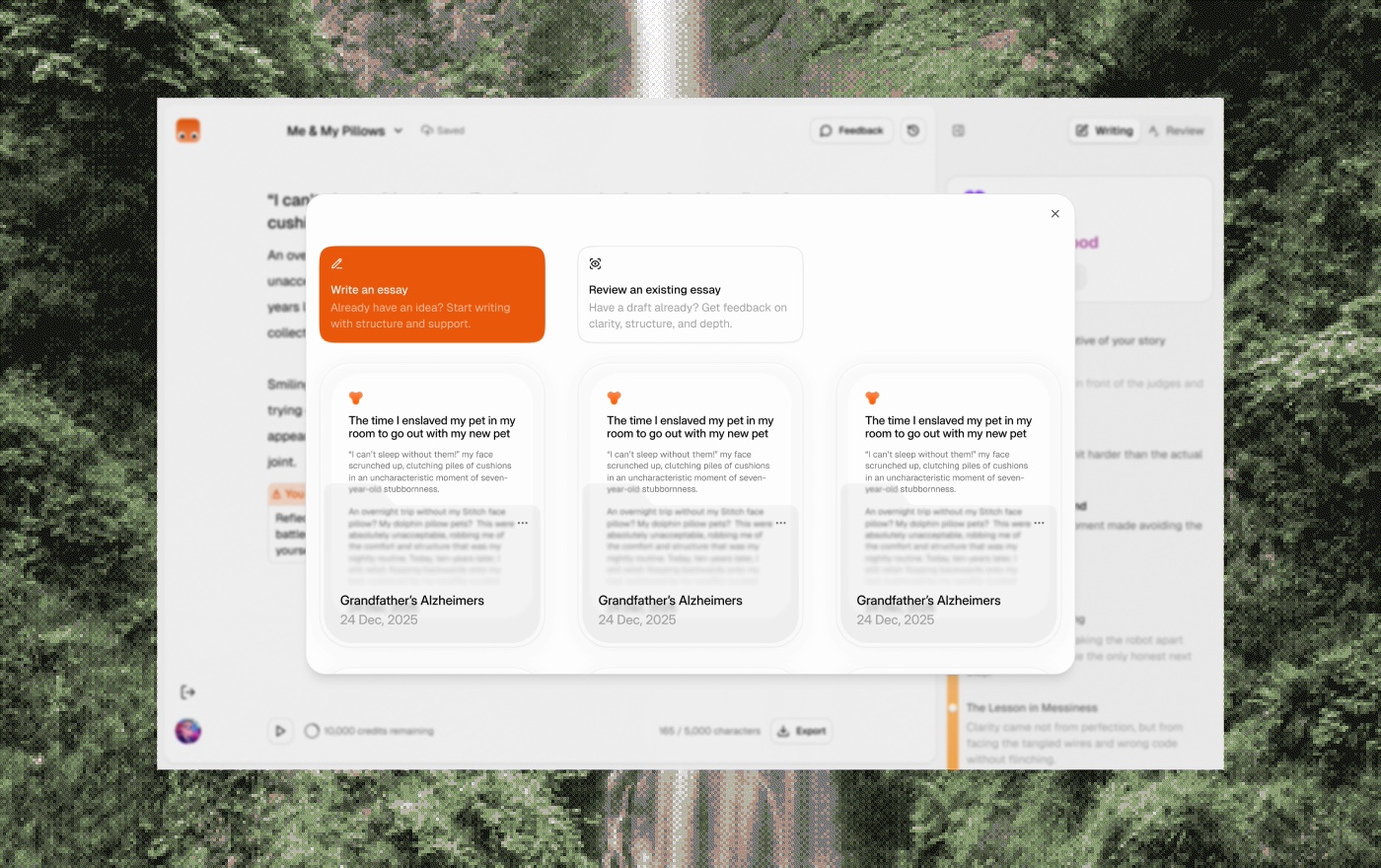
The conversations you have with GradBro aren't throwaway. Each one is a session: a saved context of your stories, values, and moments.
That matters because one good session can feed many essays. Talk through your life once, and the same material powers a Common App essay, a “why this school,” a scholarship prompt, without starting from zero each time. Run more sessions as you go. Share them. Your story base compounds instead of resetting.
Website
I designed the GradBro site: the same voice and feel carried from the app through to how it's pitched.